Published
- 5 min read
Creating Focal Points: Using Oversized Faux Trees in Open-Concept Rooms
Creating Focal Points: Using Oversized Faux Trees in Open-Concept Rooms
The “open-concept” living room is a staple of modern architecture, prized for its airy feel and flow. However, as an interior designer, I often find that these large, multi-functional spaces can feel adrift. Without walls to define the transition from “living” to “dining” or “hallway,” a room can quickly become a cavernous, uninspired void.
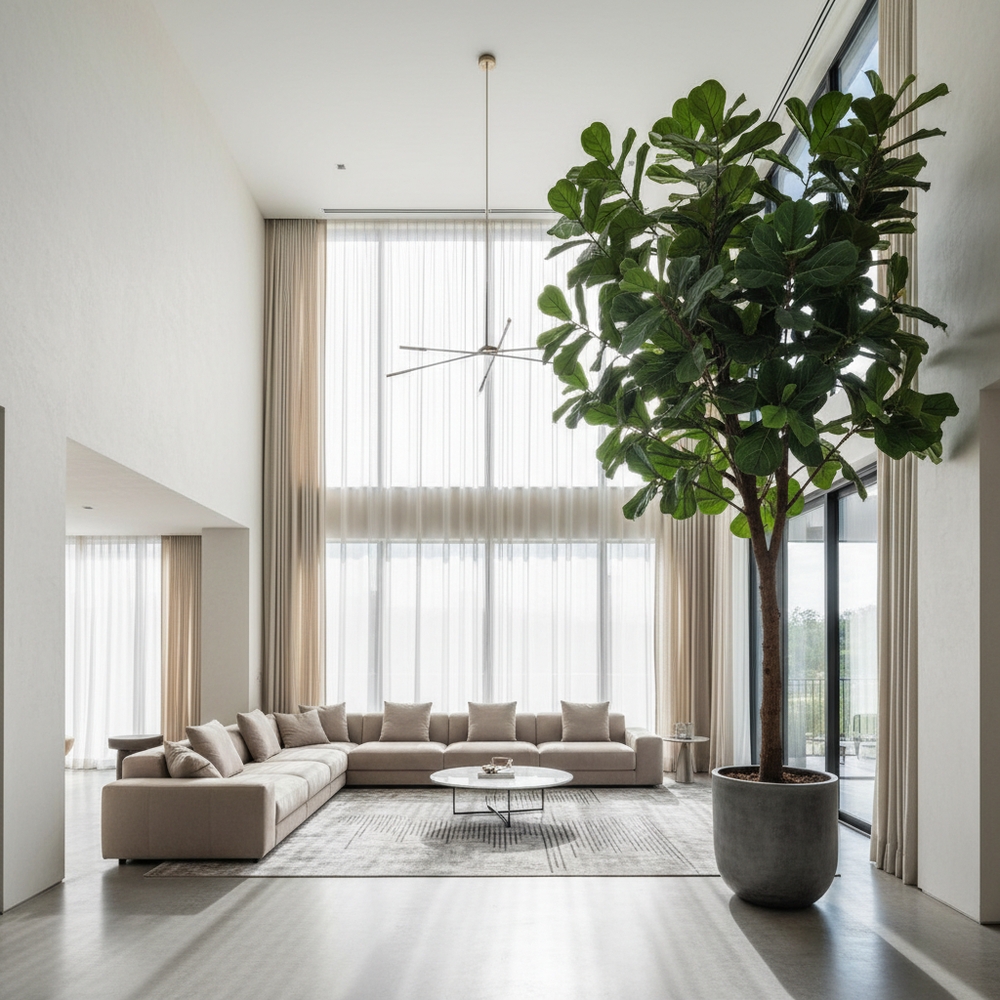
This is where the oversized faux tree becomes your most powerful design tool. In 2026, styling with large-scale artificial greenery is the definitive way to create immediate architectural interest and establish clear focal points without the need for expensive renovations. An 8-foot artificial tree doesn’t just fill a corner; it acts as a living sculpture that grounds the furniture and draws the eye upward, highlighting ceiling height and adding organic warmth to the space.
In this guide, I will share my expert strategies for selecting and placing oversized artificial trees in open-concept homes to create a cohesive, designer-level environment.
The Power of Scale: Why “Big” is Better
The most common mistake I see homeowners make in open-concept rooms is choosing plants that are too small. A 4-foot plant in a room with 10-foot ceilings and 800 square feet of floor space will look like a stray weed. In large spaces, scale is everything.
- Defining Boundaries: Use two large trees to flank an entryway or a transition point. This creates a “soft wall” that signals a change in the room’s function.
- Highlighting Height: A tall, slender tree (like a Faux Cypress or Slim Bamboo) draws the eye toward the ceiling, making the room feel grander.
- Softening Hard Angles: Open-concept rooms often have long, straight lines from kitchens and cabinetry. A lush, rounded tree (like a Large Ficus) breaks up those harsh angles with organic curves.
Top 3 Oversized Artificial Trees for Large Spaces
When you are buying trees over 6 feet tall, realism is non-negotiable because the sheer volume of the plant invites closer inspection.
1. The Architectural Anchor: Nearly Natural 8ft Fiddle Leaf Fig
If you have high ceilings, an 8-foot Fiddle Leaf is the ultimate statement piece.
- Why it works: The broad, dark green leaves provide a solid visual anchor that balances large sectional sofas and heavy media consoles.
- Placement Tip: Position this in the corner furthest from the main entrance to draw guests deep into the room.
- Get it on Amazon: Nearly Natural 8ft Artificial Fiddle Leaf Fig
2. The Airy Softener: Nearly Natural 7ft Olive Tree (Double Trunk)
For a more delicate, sophisticated vibe that won’t overwhelm a space, the double-trunk olive tree is a designer favorite.
- Why it works: The silvery-green foliage is light and airy, allowing light to pass through. This makes it perfect for placing near large windows or in the center of a room transition.
- Placement Tip: Use this between the dining area and the living area. It provides a visual break without blocking the “flow” of the open space.
- Get it on Amazon: Nearly Natural 7ft Double Trunk Olive Tree
3. The Modern Minimalist: Artificial 7ft Bamboo Tree
Bamboo provides a dense, vertical wall of green that works perfectly with contemporary and Asian-inspired aesthetics.
- Why it works: Bamboo has a rhythmic, repeated pattern that feels orderly and calm. It is excellent for creating a “privacy screen” effect.
- Placement Tip: Place 3 or 4 bamboo trees in a row inside a long, rectangular trough-style planter to create a stunning room divider.
- Get it on Amazon: Premium 7ft Artificial Bamboo Tree
Expert Styling: How to “Ground” a Massive Tree
An 8-foot tree is a lot of plant. If you don’t ground it correctly, it can look like it’s floating in the room.
1. The “Heavyweight” Planter For a large tree, you need a large planter. I recommend a pot that is at least 16-20 inches in diameter. Stone, concrete, or thick ceramic provide the visual weight needed to counterbalance the height of the tree.
2. The “Furniture Triad” Never place a massive tree completely alone. Group it with two other elements of varying heights. For example: a large tree, a medium-sized accent chair, and a low side table. This creates a “vignette” that feels like a deliberate design choice rather than an accidental placement.
3. Lighting the Focal Point A focal point needs light. Place a warm LED floor uplight behind the planter, pointing upward into the leaves. This creates dramatic shadows at night and ensures your statement tree remains the star of the room even after the sun goes down.
Conclusion
Oversized faux trees are the “magic wand” of open-concept design. They provide the height, texture, and architectural presence needed to make large rooms feel cozy and intentional. By investing in scale and following my grounding techniques, you can transform your open-concept living space into a high-end, professionally styled home that feels both grand and intimate. Go big, be bold, and let your greenery make the statement.