Published
- 4 min read
The Art of Layering: Mixing Artificial and Real Plants for a Designer Look
The Art of Layering: Mixing Artificial and Real Plants for a Designer Look
In the world of high-end interior design, the debate is no longer “real vs. fake.” In 2026, the secret to a magazine-worthy, lush interior isn’t choosing one or the other—it’s the strategic layering of both.
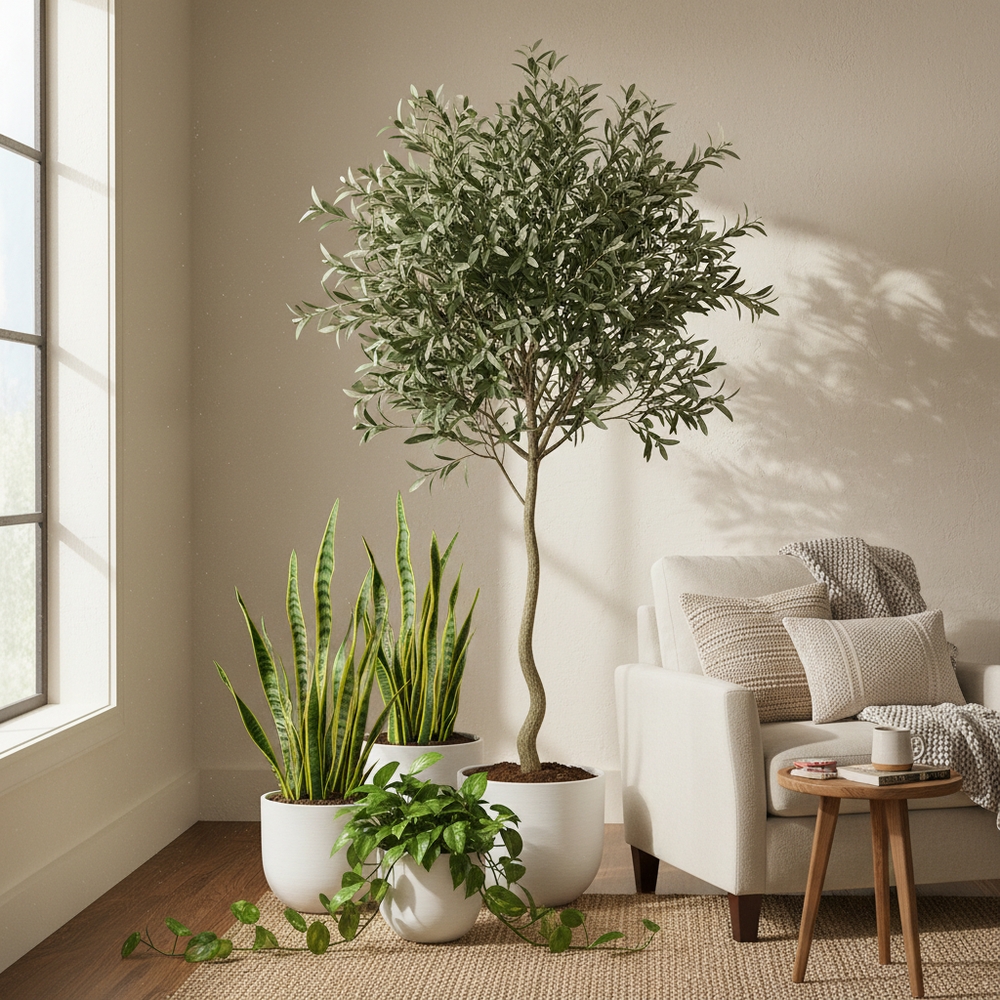
Most people believe that if you have a fake plant, it has to stand alone to avoid being “exposed.” But as a professional stylist, I do the exact opposite. I use what I call the “Halo Effect.” By surrounding a high-quality artificial tree with a few low-maintenance, living plants, the “realness” of the living plants rubs off on the artificial one. Your brain sees the living soil and the growth of the real plants and assumes everything in that cluster is alive.
This technique allows you to enjoy the volume and architectural perfection of faux greenery alongside the organic smell and evolving nature of living plants. In this guide, I will show you how to master the art of layering to create a lush, vibrant home that is both beautiful and manageable.
The Strategy: Why Layering Works
Layering greenery creates depth. When you only use fake plants, the room can feel static. When you only use real plants, the room can feel messy or high-maintenance. Layering solves both problems.
- Texture Contrast: Mixing the waxy leaves of a faux Ficus with the soft, feathery fronds of a real fern creates a rich visual tapestry.
- Visual Weight: You can use a massive, lightweight faux tree as your “anchor” and surround it with smaller, heavier real pots to ground the display.
- Low Maintenance: You only have to water 20% of your greenery, but you get 100% of the lush look.
Step 1: Choose Your “Anchor” (The Faux Statement)
Start with your largest element. This should always be a high-quality artificial tree. Why? Because large indoor trees are the hardest to keep alive and the most expensive to replace.
The Best “Anchor” Trees on Amazon
- The Classic Anchor: Nearly Natural 6ft Fiddle Leaf Fig. Its broad leaves provide the perfect backdrop for smaller living plants.
- The Airy Anchor: Nearly Natural 6ft Olive Tree. The delicate branches allow light to filter through to the living plants below.
Step 2: Add the “Halo” (Living Companions)
Surround the base of your faux tree with 2-3 living plants. Choose “bulletproof” species that thrive in the same lighting conditions where you’ve placed your tree.
The Best “Halo” Plants for Beginners
- Snake Plants (Sansevieria): Indestructible and architectural. They look great in a “triad” around a faux Ficus.
- Pothos: Place a real Pothos on a side table next to your faux floor plant. The trailing real vines will make the entire area feel authentic.
- ZZ Plant: Shiny, waxy leaves that perfectly match the luster of high-end faux plants.
Step 3: Mix the Mediums
To truly sell the illusion, you must unify the “ground” of your plant cluster.
The “Unified Soil” Trick: Top off your faux plant’s decorative pot with real potting soil or dried Spanish moss. Then, use matching pots for both your real and fake plants. If everything is in the same series of charcoal concrete or white ceramic pots, the brain won’t try to distinguish between the two.
Expert Styling: The “Green Corner” Recipe
To style a professional-looking “green corner” in your living room, follow this exact recipe:
- Rear: 1x 7ft Faux Olive Tree in a large basket.
- Mid-Left: 1x Real 2ft Snake Plant in a medium ceramic pot on a wooden stand.
- Front-Right: 1x Real Pothos in a small matching ceramic pot.
- Finishing Touch: A stack of 3 textured books and a candle.
This combination creates a three-dimensional “botanical vignette.” The real soil and the growth of the Pothos provide the sensory evidence that the entire corner is a thriving garden.
Conclusion
The art of layering is about balance. By using high-quality faux greenery for your large, difficult-to-maintain architectural elements and supplementing them with hardy living accents, you create a home that feels vibrantly alive without the stress of a full-time gardening schedule. Experiment with textures, unify your pots, and enjoy the best of both worlds.