Published
- 4 min read
Open Shelving Success: How to Layer Faux Vines with Kitchenware
Open Shelving Success: How to Layer Faux Vines with Kitchenware
Open shelving is one of the most popular trends in modern kitchen design. It makes a kitchen feel larger, brighter, and more personal. However, as an interior designer, I often see open shelves that look either too cluttered or too clinical. Without the right balance of texture and life, open shelving can end up looking like a hardware store display.
The secret to a “designer” kitchen shelf is organic layering. You need an element that breaks up the hard, repetitive lines of stacks of plates and bowls. This is where high-quality artificial trailing vines come into play. A touch of cascading greenery provides that “lived-in” lushness that turns a functional shelf into a piece of art.
In 2026, styling with faux vines is the gold standard for kitchens. They provide the visual benefits of nature without the risk of soil falling into your dinner plates or the nightmare of watering a plant on a high shelf. In this guide, I will show you how to layer artificial vines with your kitchenware like a professional stylist.
1. The “Waterfall” Technique for High Shelves
The highest shelf in your kitchen is the most difficult to style because it’s usually above eye level.
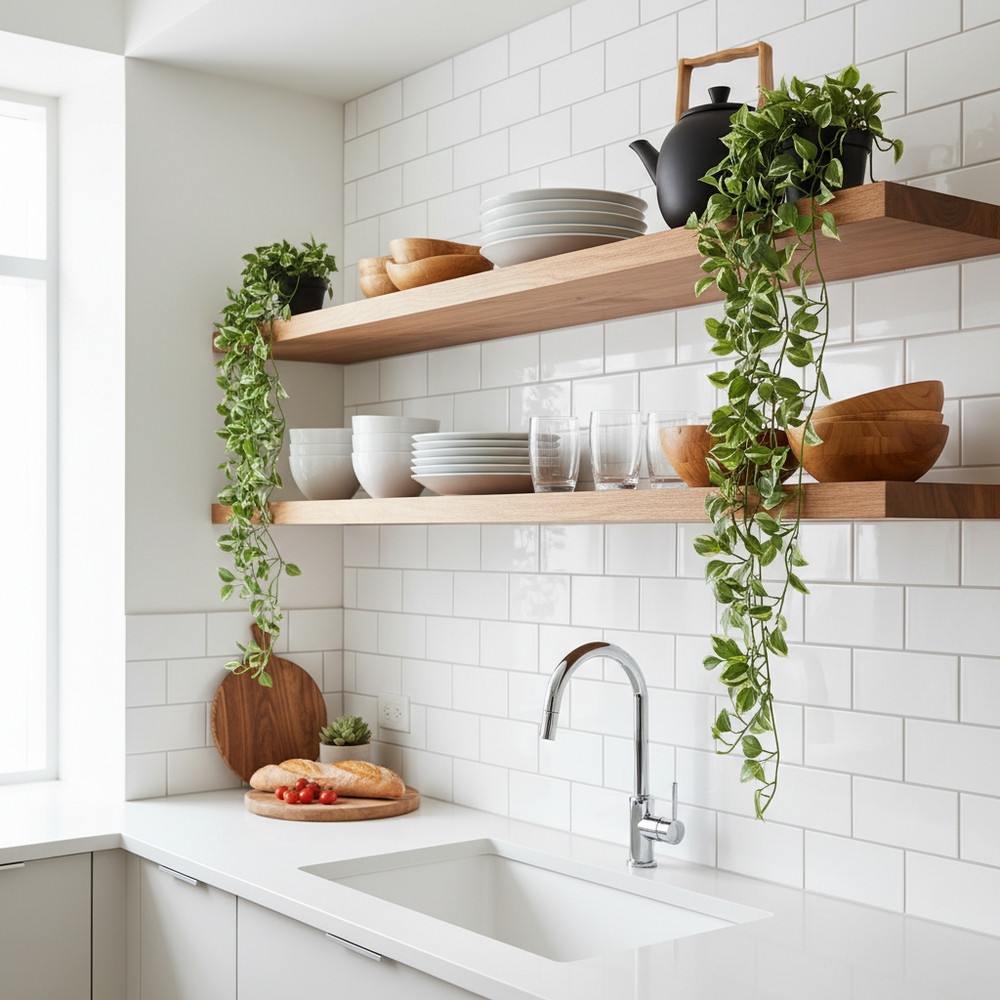
- The Technique: Place a small, heavy pot of artificial trailing Pothos or Ivy on the far end of your highest shelf. Arrange the vines so they cascade down past the shelf below.
- Why it works: It draws the eye vertically across the shelves, creating a “waterfall” of green that unifies the entire stack of shelving.
- Affiliate Pick: Premium Artificial Trailing Pothos (2-Pack)
2. The “Contextual Layering” Method
To make your faux plants look real, you must layer them behind or between your real kitchenware.
- The Technique: Tuck a small artificial succulent behind a stack of white ceramic bowls, or place a trailing vine between two wooden cutting boards leaning against the wall.
- Why it works: By partially obscuring the plant with “real” functional objects, you force the brain to see the greenery as part of the home’s organic growth rather than an isolated plastic object.
- Affiliate Pick: Mini Artificial Potted Eucalyptus Plant
3. Balancing Textures: Wood, Ceramic, and Green
The most beautiful shelves use the “Texture Triad”: something organic (wood), something smooth (ceramic), and something lush (greenery).
- The Technique: Group a wooden salad bowl, a stack of white plates, and a trailing artificial plant together in one “zone” of your shelf.
- Why it works: The warmth of the wood and the coolness of the ceramic are perfectly balanced by the vibrant green of the leaves.
Expert Styling Tip: Choosing the Right “Trailing” species
Not all trailing plants work in a kitchen. For a clean, culinary look, I recommend:
- Trailing Ivy: Classic and architectural. It works best in traditional or farmhouse kitchens.
- Trailing Eucalyptus: Sophisticated and muted. Perfect for modern, minimalist, or “Scandi” kitchens.
- String of Hearts: Delicate and whimsical. Ideal for small apartments or “boho” kitchenettes.
Conclusion
Open shelving is your kitchen’s stage. By mastering the art of layering with high-quality artificial vines, you can create a vibrant, lush, and professional-looking space that is as beautiful as it is functional. Ditch the clinical look, embrace the “waterfall” of green, and turn your kitchen shelves into a designer masterpiece.