Published
- 5 min read
Seasonal Faux Decor: How to Rotate Your Artificial Greenery Throughout the Year
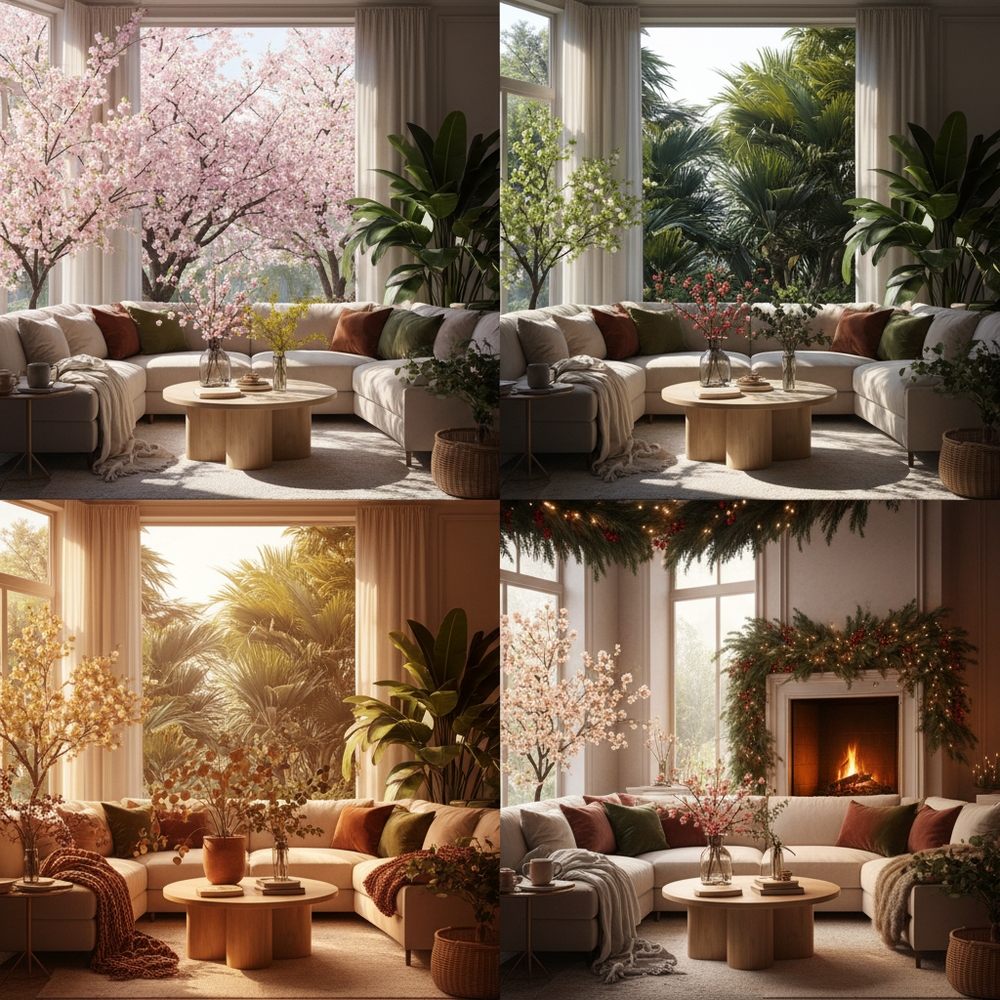
Seasonal Faux Decor: How to Rotate Your Artificial Greenery Throughout the Year
One of the most common misconceptions about artificial plants is that they are “set it and forget it” decor. While it’s true that a high-quality faux Fiddle Leaf Fig can sit in your living room for five years and still look great, the most stylish homes use greenery as a dynamic element that shifts with the seasons.
As an interior stylist, I encourage my clients to think of their artificial plants and florals like their wardrobe. You wouldn’t wear a heavy wool sweater in July, and you shouldn’t necessarily have a deep, autumnal eucalyptus arrangement on your dining table in May. By rotating your faux decor seasonally, you keep your home’s energy fresh, prevent “decor fatigue,” and reinforce the illusion of realism—after all, real plants change with the seasons, so yours should too.
In this guide, I will walk you through the art of seasonal rotation, showing you how to transition your home through Spring, Summer, Fall, and Winter using the best artificial botanical finds on Amazon.
The Strategy: “Permanent” vs. “Transition” Greenery
Before you start swapping every plant in your house, it’s important to understand the two layers of faux decor:
- Permanent Anchors: These are your large, non-flowering floor plants like Olive Trees, Snake Plants, or Monstera. These stay year-round because their real-life counterparts are evergreen indoor plants.
- Transition Accents: These are your tabletop arrangements, wreaths, and flowering stems. This is where you swap and rotate to match the season’s palette and mood.
Spring: The Season of Renewal and Soft Textures
Spring decor is all about lightness, delicate textures, and a shift away from the heavy, dark tones of winter.
- The Palette: Pale greens, soft pinks, lavender, and crisp white.
- The Hero Stems: Faux Cherry Blossoms and Tulips.
- Affiliate Pick: Nearly Natural Artificial Cherry Blossom Stems (Set of 6)
- Styling Tip: Replace your heavy winter pine branches with 3-5 long cherry blossom stems in a tall glass vase. The airy, delicate flowers instantly signal that the seasons have shifted. Move your larger green plants near windows to catch the increasing spring sunlight.
Summer: Vibrant Lushness and Tropical Energy
Summer is the time to go bold. Think high-saturation greens and plants that evoke a sense of warmth and vacation.
- The Palette: Deep forest greens, vibrant yellows, and pops of tropical coral or fuchsia.
- The Hero Stems: Large Monstera leaves and Areca Palms.
- Affiliate Pick: Kazeila 5ft Artificial Areca Palm
- Styling Tip: Summer is when your “Tropical” plants should take center stage. If you have a faux palm, move it to the living room or entryway. For the dining table, use a large, single Monstera leaf in a simple modern vase for a clean, architectural summer look.
Fall: Warmth, Texture, and “Moody” Greenery
When the air turns crisp, your decor should pivot toward warmth and visual weight. This is the best time for “flocked” or “dusty” textures.
- The Palette: Muted sage, burnt orange, burgundy, and warm browns.
- The Hero Stems: Dusty Eucalyptus and Autumn Maple branches.
- Affiliate Pick: Artificial Silver Dollar Eucalyptus Stems (Warm Toned)
- Styling Tip: Swap your bright summer florals for stems with deeper, more muted tones. Eucalyptus is a year-round favorite, but in the fall, I choose stems with a heavier, more “dried” appearance. Combine them with a few faux pampas grass stems for added autumnal texture.
Winter: Deep Evergreens and Structured Simplicity
Winter decor shouldn’t just be about Christmas trees. It’s about creating a sense of “hygge”—coziness and warmth during the darkest months.
- The Palette: Deep emerald green, silver, and wood tones.
- The Hero Stems: Faux Pine, Cedar, and Berry branches.
- Affiliate Pick: Nearly Natural Artificial Cedar Pine Branches
- Styling Tip: Use structured evergreens to line your mantel or as a centerpiece. Unlike real pine, faux cedar doesn’t drop needles all over your floor. To keep it from feeling too “holiday-specific,” avoid red ribbons and instead use natural textures like twine or oversized pinecones.
Expert Tips for Storing Your Seasonal Faux Plants
If you’re going to rotate your decor, you need a system to ensure your plants don’t get crushed or damaged while “off-duty.”
- Use Long Plastic Tubs: For stems and wreaths, use long, flat under-bed storage bins. This prevents the delicate silk petals from being squashed.
- Label Everything: Mark your bins “Spring Greenery,” “Fall Accents,” etc. This makes the transition process take 15 minutes instead of two hours.
- Clean Before Storing: Before you pack a plant away, give it a quick wipe or a blast of cool air from a hairdryer. You don’t want to store a year’s worth of dust with your decor.
- Preserve the Shape: If a plant has wired stems, gently fold them inward rather than bending them sharply. This makes it easier to “re-fluff” them when their season comes back around.
The “One-In, One-Out” Rule
To keep your home from feeling cluttered, I recommend the “one-in, one-out” rule. If you bring out a large fall arrangement for the dining table, the summer centerpiece should go into storage immediately. This ensures your home always feels intentional and well-styled, rather than just “full.”
Conclusion
Seasonal rotation is the highest level of artificial plant styling. It keeps your home’s aesthetic in sync with the world outside, making the illusion of your “living” decor far more powerful. Whether it’s the delicate blossoms of spring or the deep, comforting pines of winter, your home can be a reflection of the passing year without ever requiring a single drop of water.