Published
- 5 min read
Sleep Better with Greenery: The Impact of Faux Plants in the Bedroom
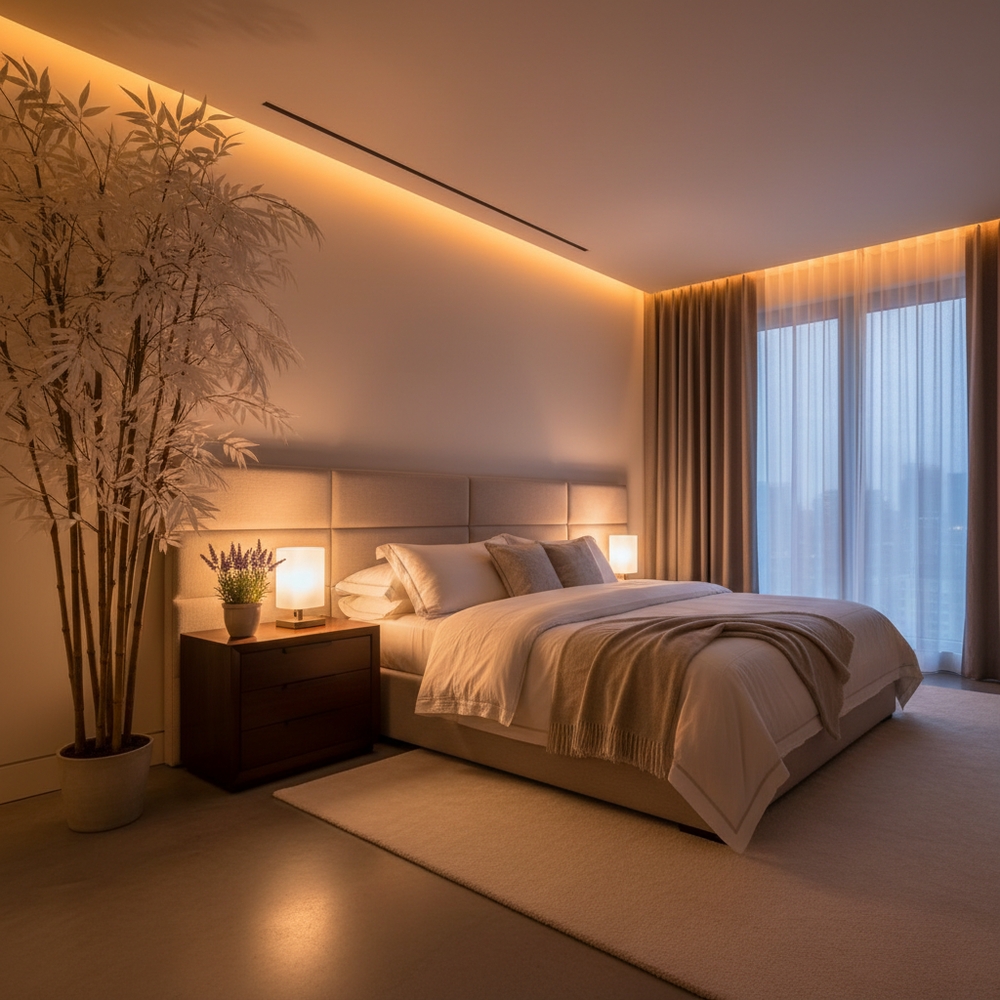
Sleep Better with Greenery: The Psychological Impact of Faux Plants in the Bedroom
We all know that a good night’s sleep is the foundation of health, productivity, and happiness. But in our increasingly digital and high-stress world, many of us struggle to truly “switch off” when we enter our bedrooms. As an interior designer with a focus on wellness-driven spaces, I’ve spent years researching how environmental factors—color, light, and texture—influence our circadian rhythms and stress levels.
One of the most effective ways to lower cortisol levels and trigger the body’s relaxation response is the introduction of greenery. You might ask: “Does it work if the plants are fake?” The answer is a resounding yes.
While artificial plants don’t perform the photosynthesis or oxygen-exchange that living plants do, they provide the exact same biophilic psychological benefits. Our brains are hardwired to respond to the fractal patterns and green hues of nature. Seeing a lush, leafy plant when you wake up or before you go to sleep signals to your nervous system that you are in a safe, abundant environment.
In this guide, I will explore the science behind “visual nature” and show you how to style the best bedroom faux plants from Amazon to create a sleep-optimized sanctuary.
The Science of “Biophilic Illusion”
Biophilia is the innate human instinct to connect with nature. Research into “Attention Restoration Theory” shows that looking at nature (even in pictures or as artificial models) allows the brain to recover from the cognitive fatigue of urban life.
- Lowering Cortisol: Studies have shown that simply being in the presence of green foliage can reduce heart rates and blood pressure.
- Reducing Visual Noise: The organic, irregular shapes of leaves break up the harsh, sterile lines of bedroom furniture and technology, creating a “softer” visual field that is easier for the brain to process.
- Color Therapy: The color green is positioned in the center of the visible spectrum and is the easiest color for the human eye to perceive, requiring the least amount of ocular muscle strain.
Top 3 Relaxing Faux Plants for Your Bedroom
For sleep-focused spaces, I avoid “busy” or sharp plants. Instead, I look for soft textures and weeping silhouettes.
1. The Peace Keeper: Artificial Lavender in a Stone Pot
Lavender is the universal symbol of sleep. While faux lavender doesn’t have a scent, its soft purple-green hue and delicate texture are incredibly soothing.
- Why it works: It adds a touch of “wildflower” charm to a nightstand.
- Expert Tip: Spray the base of the pot with a real lavender essential oil spray once a week to add the sensory layer of aromatherapy.
- Get it on Amazon: Realistic Artificial Potted Lavender
2. The Soothing Canopy: Nearly Natural 6ft Silk Bamboo Tree
Bamboo is often used in zen-inspired design because of its rhythmic, orderly growth pattern.
- Why it works: The thousands of tiny silk leaves create a “canopy” effect that makes a bedroom feel protected and private.
- Expert Tip: Place this near a corner mirror. The reflection will make the “forest” look twice as deep, enhancing the biophilic effect.
- Get it on Amazon: Nearly Natural 6ft Silk Bamboo Tree
3. The Graceful Weeper: Faux String of Hearts
For a touch of romance and softness, nothing beats the delicate, heart-shaped leaves of a trailing String of Hearts.
- Why it works: Its long, thin vines drape gracefully over dressers or bed-frames, adding a sense of movement and “flow” to the room.
- Get it on Amazon: Premium Artificial String of Hearts
Designing for Sleep: The “Zen Corner” Method
To maximize the psychological benefits of your faux bedroom greenery, I recommend creating a dedicated “Zen Corner.”
The Setup:
- Place a comfortable armchair in a corner.
- Anchor the space with a tall artificial tree (like the Bamboo mentioned above).
- Layer in soft lighting. Use a floor lamp with a warm, amber-toned bulb (low blue light).
- Add your faux plants. The greenery should be the bridge between the chair and the light.
Spending just 10 minutes reading in this “mini-jungle” before you get into bed will significantly lower your stress levels and prepare your brain for deep, restorative sleep.
Conclusion
You don’t need to be a gardener to enjoy the stress-reducing benefits of a green bedroom. By choosing high-quality, soft-textured artificial plants and positioning them to create a biophilic sanctuary, you can trick your brain into a state of deep relaxation. Invest in your sleep, invest in your space, and let the power of “visual nature” transform your nights.